
Passion Fruit
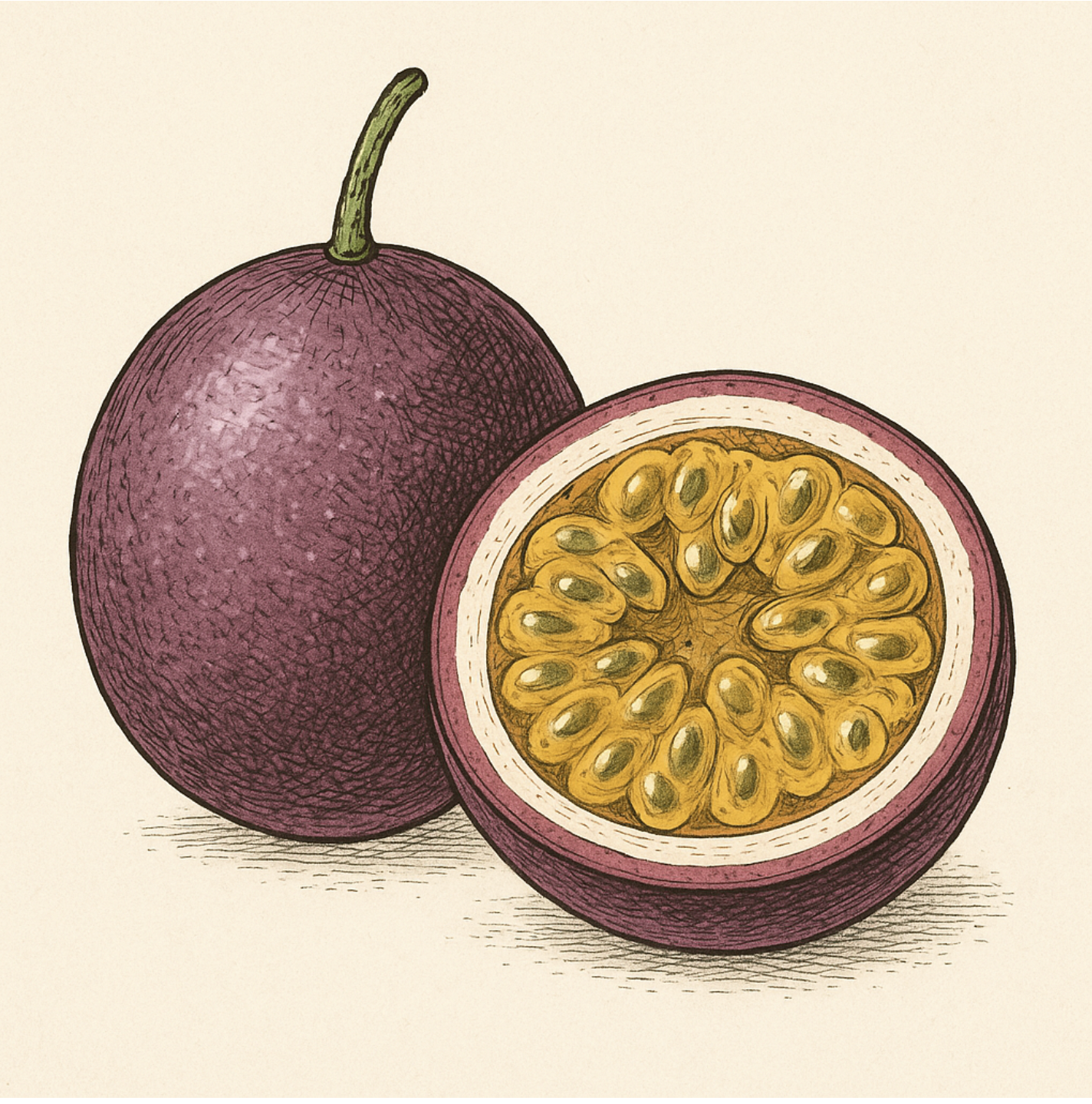
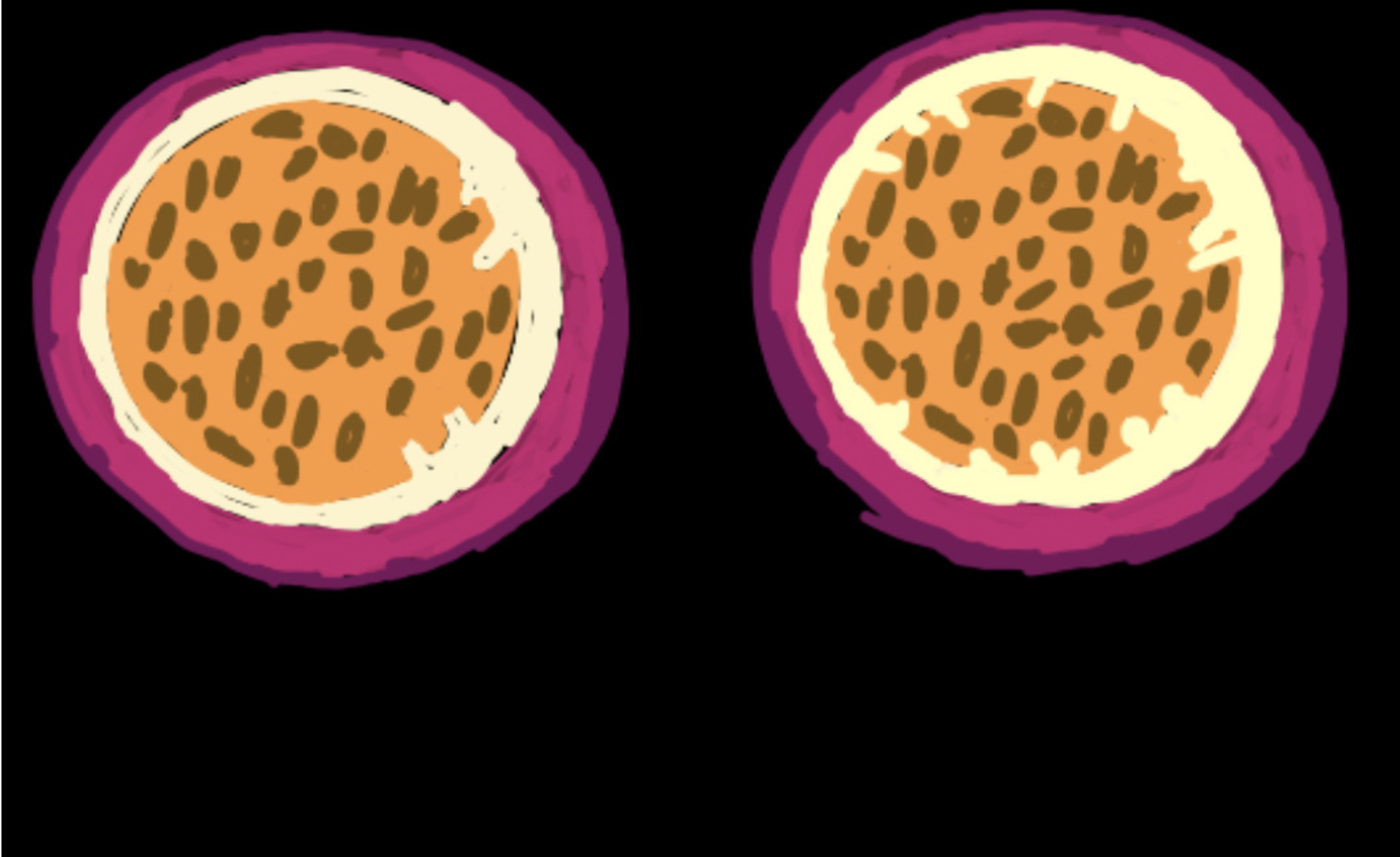
The Passion fruit (Passiflora Incarnata) is a vigorous, climbing vine that produces a unique, round or oval fruit. Known in Portuguese and Spanish as maracujá and maracuyá, respectively, it derives its name from the Tupi (an Indigenous people of Brazil) word mara kuya, meaning “the fruit that serves itself.” It is indigenous to the subtropical regions of South America, specifically from southern Brazil through Paraguay and northern Argentina. Passion fruit is typically reddish or green on the outside, with an orange-yellow, pulpy interior that surrounds its seeds. The fruit is edible, with the seeds and their pulp being the parts most commonly consumed.The outside (rind) is tough and wrinkly when ripe, while the inside is filled with an aromatic, jelly-like pulp and many small, crunchy, edible seeds. Its flavor is a complex, tropical blend of sweet and tart.
Nutriiton and Culinary Use
Nutritionally, passion fruit contains valuable compounds including vitamin C, dietary fiber, B vitamins, iron, and phosphorus. It has also been studied for a wide range of potential health benefits, including antioxidant, antimicrobial, anti-inflammatory, antihypertensive, hepatoprotective, and lung-protective properties. Additional research suggests anti-diabetic, sedative, antidepressant, and anxiolytic-like effects. Passion fruit can even be used to treat cough, hoarseness, constipation, dysentery, insomnia, joint pain, and menstrual cramps.
Passionfruit is incredibly versatile in the kitchen. Its intense flavor is used in both sweet and savory dishes around the world. Passion fruit can easily be incorporated into fruit smoothies, desserts, and teas, providing antioxidants, dietary fiber, B vitamins, and vitamin C, which would help boost metabolism, bolster immune support, and improve digestion.
Medicinal Purposes
Traditionally, passionflower has been used as a sedative. Sixteenth-century Spanish explorers in South America learned of the plant and later introduced it to Europe, where it became widely cultivated and incorporated into European folk medicine. Today, passionflower is commonly promoted as a dietary supplement for anxiety (including pre-surgical anxiety), sleep disturbances, stress, attention-deficit hyperactivity disorder (ADHD), pain, and other conditions. Passion fruit has also been used to help treat cough, hoarseness, constipation, dysentery, digestive issues, insomnia, joint pain, menstrual cramps, and hormonal balance.
Simple Ways to Use Passion Fruit
Passionfruit "Sunshine" Popsicles. This is a fun, healthy, and delicious way for kids to enjoy the benefits of passionfruit. It’s a refreshing treat that feels like a dessert but is packed with vitamins and fiber.
How to Make It: Scoop the pulp from 4-5 passionfruits into a blender. Add one cup of plain or vanilla Greek yogurt and one ripe banana. Blend until smooth. (For a sweeter version, you can add a little honey or maple syrup). Pour the mixture into popsicle molds and freeze for at least 4-6 hours.Enjoy a tropical, sunshine-yellow popsicle full of protein, probiotics, and passionfruit power!
Passionfruit & Honey Exfoliating Face Mask The acids and antioxidants in passionfruit make it an excellent ingredient for a rejuvenating face mask. The natural alpha-hydroxy acids (AHAs) gently exfoliate dead skin cells, while the honey moisturizes and has antibacterial properties. How to Make It: Scoop the pulp from 1-2 passionfruits into a small bowl. Mix in one tablespoon of raw honey and one teaspoon of plain yogurt or oatmeal for a thicker consistency. After cleansing your face, apply the mixture evenly, avoiding the eye area. Leave the mask on for 10-15 minutes. Rinse thoroughly with warm water, pat your face dry, and follow with your favorite moisturizer. This mask will leave your skin feeling soft, smooth, and brightly hydrated.
Sources:
He, X., Luan, F., Yang, Y., Wang, Z., Zhao, Z., Fang, J., Wang, M., Zuo, M., & Li, Y. (2020). Passiflora edulis: An Insight Into Current Researches on Phytochemistry and Pharmacology. Frontiers in Pharmacology, 11, 617. https://doi.org/10.3389/fphar.2020.00617
Prasertsri, P., Sinnitithavorn, K., Raroengjai, C., Phichayaworawit, R., Taweekarn, P., Vannajak, K., & Booranasuksakul, U. (2024). Immediate effects of passion fruit juice supplementation on working ability and attention in healthy participants. Current Research in Physiology, 7, 100120. https://doi.org/10.1016/j.crphys.2024.100120
