
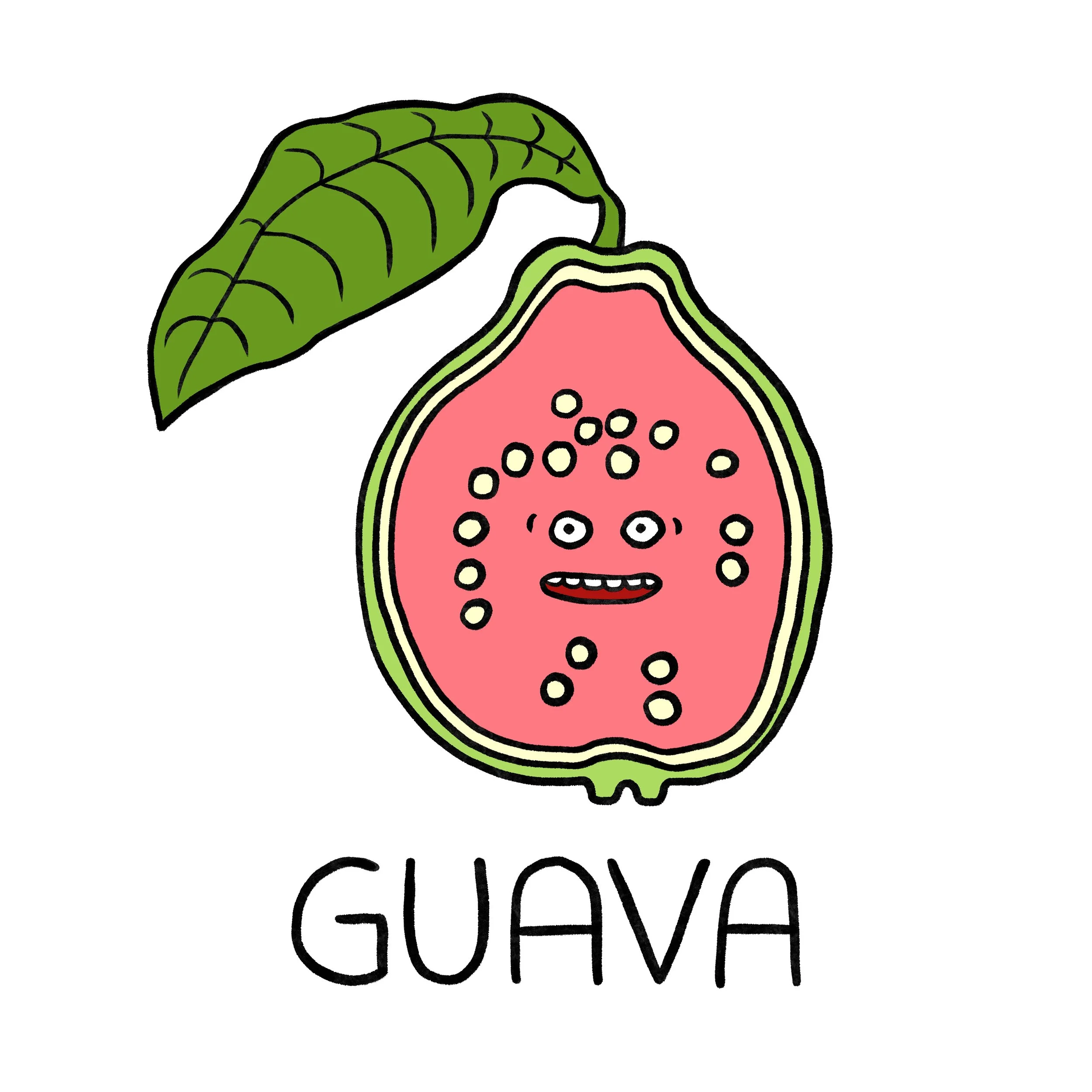
Guava Scientific name: Psidium guajava L. is a tropical fruit-bearing tree belonging to the Myrtaceae family, which also includes eucalyptus and clove. Native to Central America and parts of northern South America, guava has been cultivated and naturalized throughout tropical and subtropical regions of the world. Today, it is widely grown across the Caribbean, South and Southeast Asia, Africa, and parts of the southern United States.
The guava tree is a small evergreen to semi-evergreen species, typically reaching heights of 10–30 feet. It is characterized by smooth, mottled bark that peels in thin flakes, revealing greenish or copper-toned layers beneath. The leaves are opposite, oval-shaped, and aromatic when crushed. Guava produces solitary white flowers with five delicate petals and numerous prominent stamens, giving the blossoms a soft, brush-like appearance.
The fruit varies in size and shape, ranging from round to pear-shaped, and typically measures 4–12 cm in length. The thin skin may be green, yellow, or light pink when ripe. The flesh can be white, pale yellow, deep pink, or salmon-colored, depending on the variety, and contains numerous small, edible seeds embedded within its soft pulp. The flavor is fragrant and complex—sweet with mild acidity and subtle floral notes.
Guava is exceptionally nutrient-dense, providing high levels of vitamin C, fiber, vitamin A, potassium, and antioxidants such as lycopene (particularly in pink-fleshed varieties). The fruit may be eaten fresh or incorporated into juices, jams, jellies, candies, pastries, sauces, and savory dishes. In many cultures, guava paste and nectar are staple preparations.
Historically, various parts of the guava plant—including the leaves, bark, and fruit—have been used in traditional systems of medicine. Guava leaf infusions have been employed in folk practices to support digestive balance, soothe gastrointestinal discomfort, and promote oral health. The fruit itself has been valued for immune support and overall vitality.
Throughout the regions where it grows, guava is regarded not only as a nourishing food source but also as a plant of resilience and abundance. Its ability to thrive in diverse climates and soil conditions has made it a symbol of adaptability and sustenance within many traditional agricultural communities.
Guava-Honey Glow-up Mask
Guava and honey face mask hydrates, brightens, and reduces inflammation. Blend 2 tbsp mashed ripe guava pulp with 1 tbsp honey. Option to add 1 tsp lemon juice to help reduce acne and fade scars. Avoiding the eye area, apply for 15 minutes to brighten and soothe skin.
