
Coconut
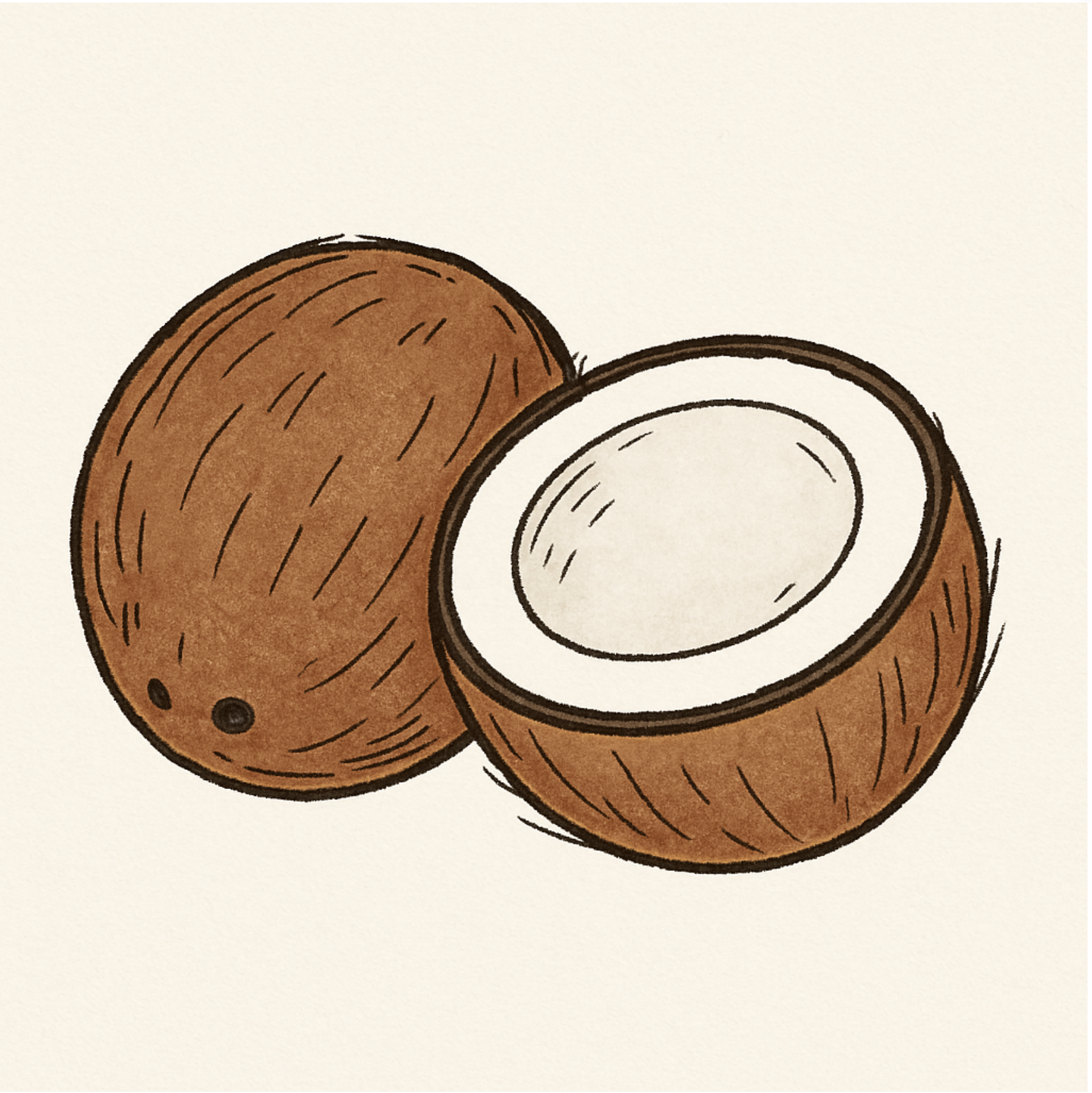
The coconut (Cocos nucifera) is a member of the palm family (Arecaceae) and the only living species in the genus Cocos. The term “coconut” may refer to the entire palm tree or to its fruit. Although coconuts are now widespread throughout coastal tropical regions worldwide, they originated in the Indo-Pacific, where they have long played a central role in the cultural and religious practices of Austronesian peoples. The name Cocos comes from the 16th-century Portuguese word coco, meaning “head” or “skull,” inspired by the three indentations on the shell that resemble a face.
Coconut palms are typically cultivated in hot, humid tropical climates and require year-round warmth and moisture to grow and produce fruit. The coconut palm is exceptionally versatile, providing food, fuel, cosmetics, folk medicines, building materials, household goods, and even musical instruments. Coconut is also widely used in culinary traditions around the world; its milk, oil, dried flesh, and coconut water are easily incorporated into dishes such as curries and stews, desserts, beverages, and a wide variety of other preparations.
Nutrition & Health benefits
Coconut meat is rich in minerals, particularly manganese, which supports enzyme function and fat metabolism, and copper, which is essential for bone formation and heart health. Coconut also contains phosphorus, selenium, iron, zinc, and potassium. Coconut oil is a significant source of dietary fat, and its medium-chain triglycerides (MCTs) are rapidly absorbed by the body. Emerging research suggests these fats may support brain health, enhance mental clarity and focus, and offer protective effects against neurodegenerative conditions by reducing oxidative stress and inflammation.
Medicinal Purposes
Across many cultures, all parts of the coconut palm are used in traditional medicine for their antibacterial, antiviral, antifungal, and antiparasitic properties. Various preparations have been employed to address ailments such as fever, diarrhea, skin disorders, digestive and respiratory issues, and reproductive health concerns.
Coconut oil is often applied to the hair and skin to moisturize and soothe irritation, reduces dryness, may help protect the skin barrier, and even promote hair growth. The lauric acid in coconut oil has natural antibacterial and antifungal effects. Coconut water contains potassium and electrolytes that support hydration, and its healthy fats may support good cholesterol levels when used in moderation.
Ways to apply a Coconut
There are many ways you can apply coconuts to your daily life! Many ways are very healthy and will help you look and feel beautiful. You can use coconuts in your hair and on your skin for face masks, and you can also drink them as smoothies!
Adult Application – Coconut Oil Hair Repair Mask ♦ Warm 1–2 tablespoons of coconut oil until soft. ♦ Massage into dry hair, focusing on the ends. ♦ Leave for 20–30 minutes, then wash your hair as usual. ♦ Benefits: Adds shine, reduces breakage, and hydrates dry hair.
Children Application – Coconut Water Hydration Smoothie ♦ Blend: ½ cup coconut water + ½ banana + handful of strawberries + ice. ♦ Serve chilled. ♦ Benefits: Hydrates and provides natural electrolytes without added sugar.
